
SHERPA Algorithm: Setting New Performance Standards
At the heart of HEEDS 2510 lies a dramatically enhanced SHERPA optimizer, our flagship multi-objective optimization strategy that intelligently combines search strategies to find optimal solutions.
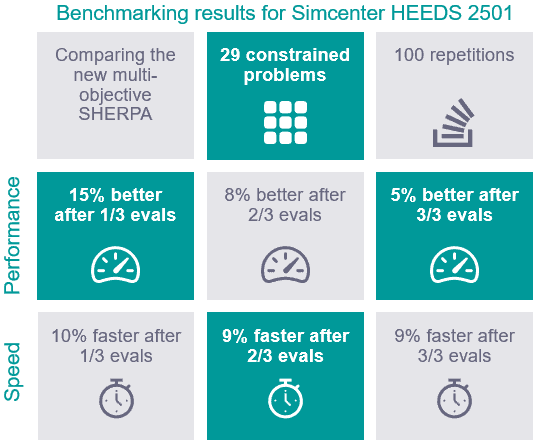
The performance comparison between the new SHERPA 2510 and the legacy SHERPA 2504 was conducted using 29 constrained problems, each involving between 1 and 20 constraints. For each problem, the nominated performance was tracked. Both algorithms were tested 100 times per problem using different baselines and random seeds.
Data at three key points (after the first third, second third, and final third of the studies) are provided for a more detailed representation of the implementation’s progression. This adjustment led to the most significant improvements, with an 18% increase in performance and a 10% boost in speed.
SHERPA 2510 consistently outperforms SHERPA 2504 on multi-objective problems and never falls behind in any scenario.
How it works
The new release introduces
- sophisticated constraint management specifically designed for two and three objective Pareto optimizations.
- hypervolume metrics, that optimizes the calculation of non-dominated points more efficiently, ensuring that the algorithm focuses computational resources where they matter most.
Hypervolume metrics is a mathematical approach used in multi-objective optimization to measure the quality of a set of solutions. In the context of SHERPA’s improvements, it helps optimize how non-dominated points are calculated when working with Pareto fronts.
Hypervolume quantifies the volume of objective space that is dominated by a set of solutions. A larger hypervolume indicates a better set of solutions that covers more of the optimal trade-off space.
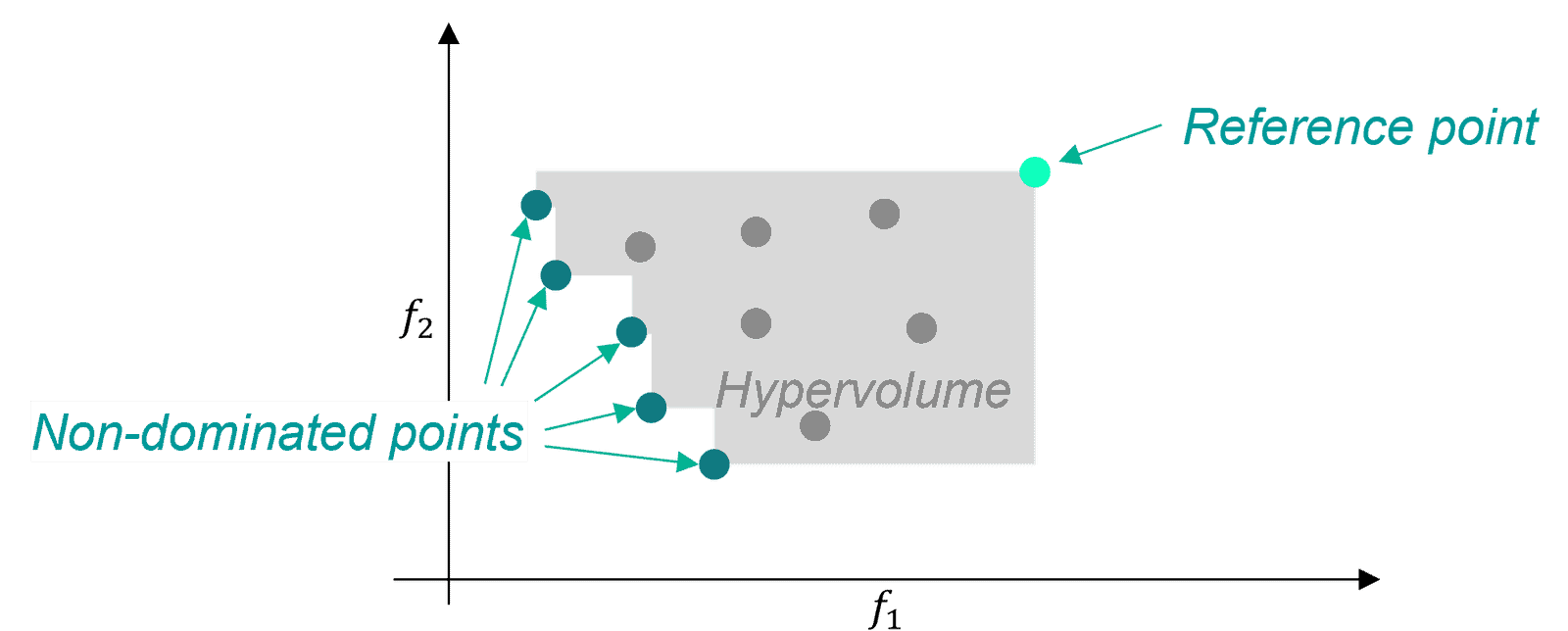
By using hypervolume metrics, SHERPA can more intelligently decide which points to evaluate next, focusing computational resources on areas that will most improve the overall solution set rather than evaluating points that won’t contribute meaningfully to the Pareto front.
In constrained optimization problems, hypervolume helps identify which feasible solutions are truly non-dominated, improving the algorithm’s ability to navigate complex design spaces with multiple constraints. The principle of Soft Constraint Management approach was implemented: constraints are handled more flexibly during the initial search phase. This adjustment led to the most significant improvements, with an 18% increase in performance and a 10% boost in speed.
Hands on testing
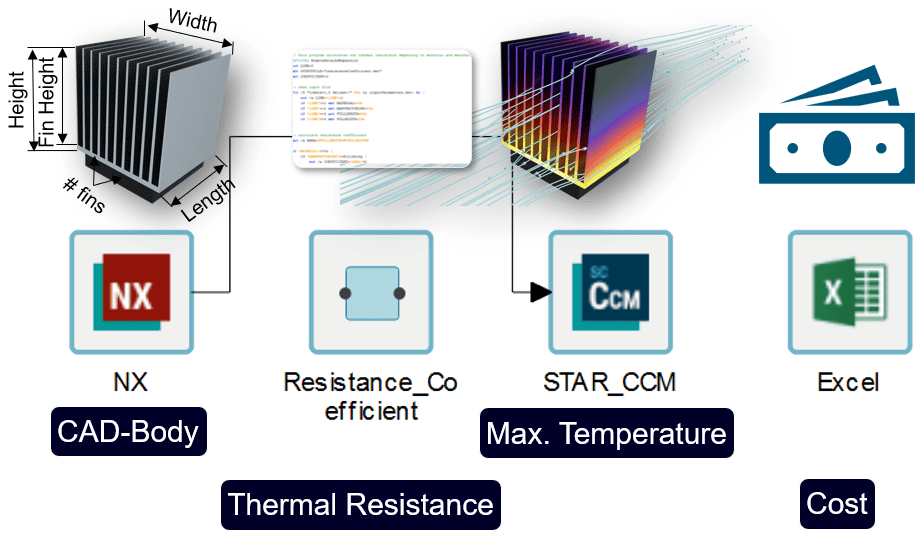
To validate the SHERPA improvements in a realistic engineering scenario, we conducted our own comparison using a multi-disciplinary, multi-objective optimization challenge: designing a passive heat sink for processor cooling.
The optimization problem involved a parametric NX model of a passive heat sink designed to cool a CPU chip within an air tunnel. The design was controlled by 9 parameters defining the cooling fin geometry and material.
The optimization objectives were to simultaneously:
- Minimize chip temperature for optimal thermal performance
- Minimize production cost for economic viability
Subject to critical constraints:
- Maximum allowable chip temperature
- Maximum mass limit
- Production cost approximation bounds
The results demonstrated the real-world impact of the algorithmic improvements:
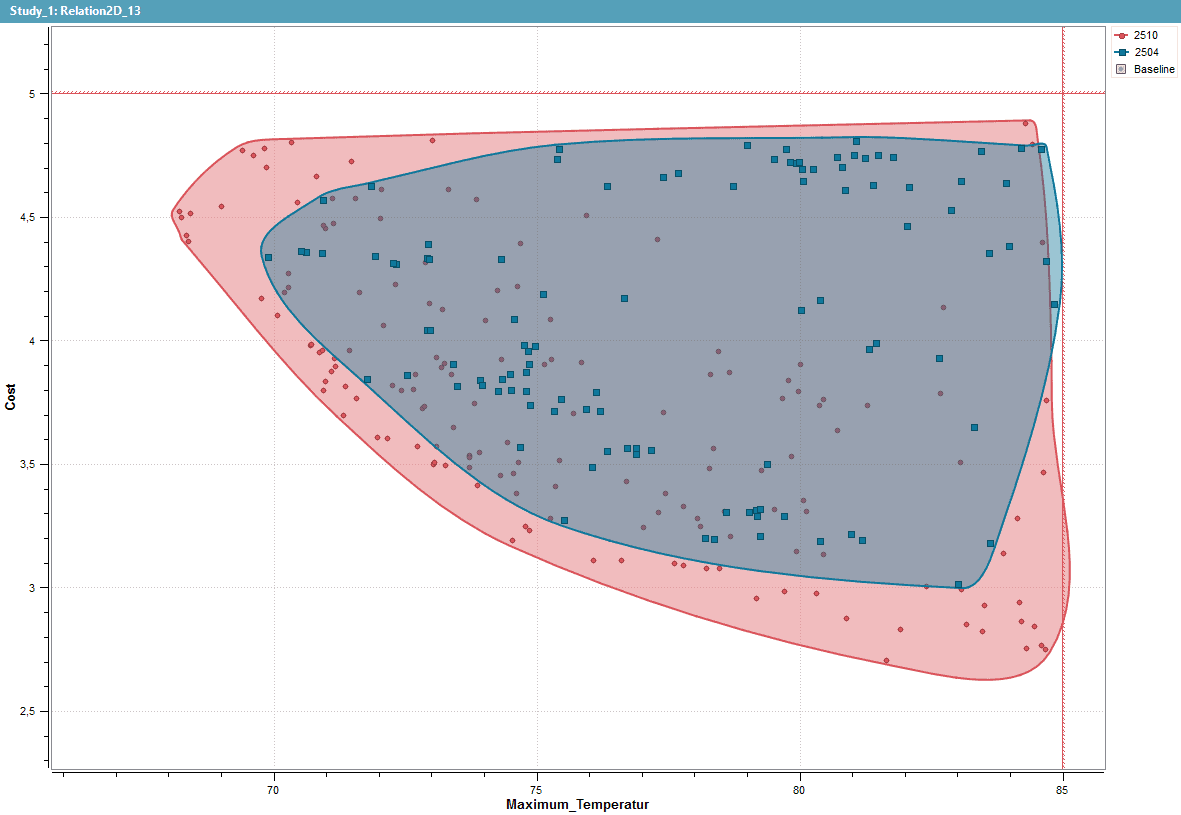
- Faster feasibility convergence: HEEDS 2510 discovered more valid design variants at earlier stages of the optimization process. In total 50% more feasible variants where found.
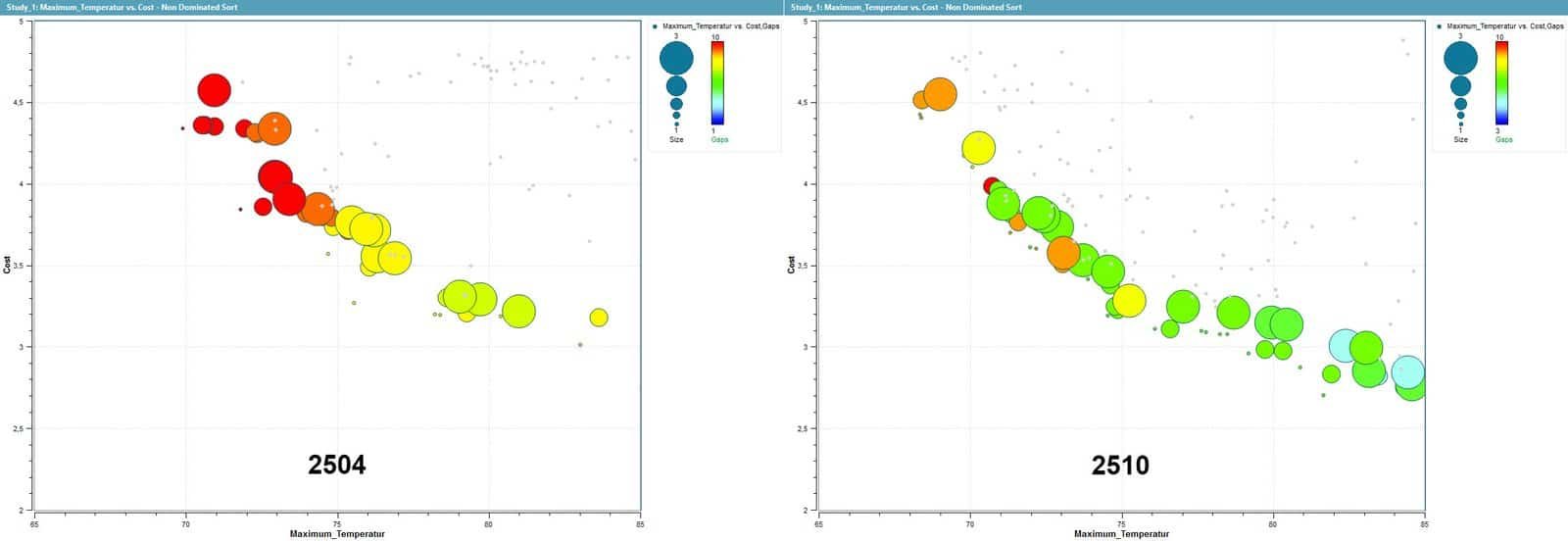
- Superior Pareto front exploration: The new SHERPA algorithm explored the trade-off space more thoroughly, identifying design alternatives across a broader range of temperature-cost combination
- Improved optimal solutions: The final Pareto front was pushed significantly further toward better objective values, delivering heat sink designs with lower temperatures and costs than those found by the previous version.
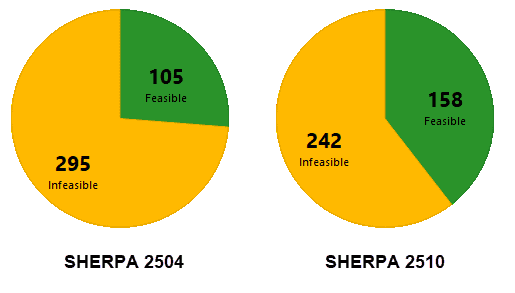
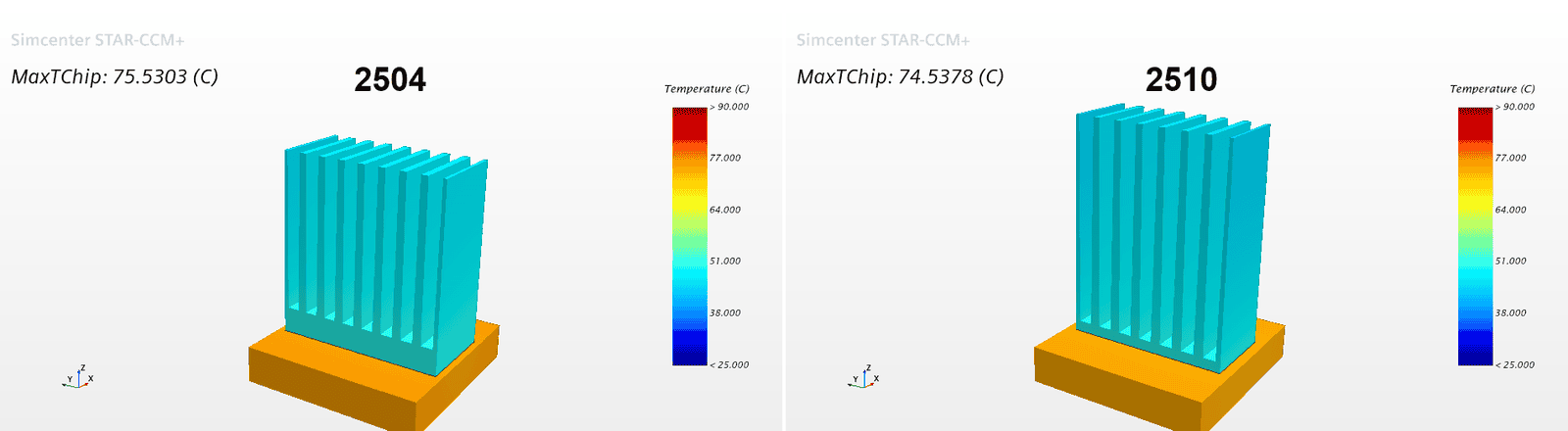
The heat sink case study exemplifies performance improvements measured during Siemens benchmarks. This multi-physics optimization combined constraints represents exactly the type of complex engineering challenge where SHERPA’s improvements shine. The enhanced constraint handling and more efficient Pareto front calculation translated directly into visible benefits, directing the algorithm towards designs with a smaller number of fins, compared to 2504 version.
Conclusion
HEEDS 2510 represents a significant leap forward with the enhanced SHERPA algorithm which provides faster convergence, more thorough exploration of the design space, and superior solutions. Ready to experience these improvements firsthand? Explore what HEEDS 2510 can do for your next optimization project.
The Author
Florian Vesting, PhD
Contact: support@volupe.com
+46 768 51 23 46