Mixing Vessel Workflow API in Simcenter STAR-CCM+

Robin VictorSenior Application Specialist
Written in 2021. Menus and defaults may differ in newer releases.
In short
The Mixing Vessel Workflow, formerly Admixtus, is an application from Siemens Support Center that runs on top of Simcenter STAR-CCM+; its licence is included in the basic licence. It guides you through vessel design, meshing with a sliding mesh and physics set-up, and creates typical reports, plots and scenes.
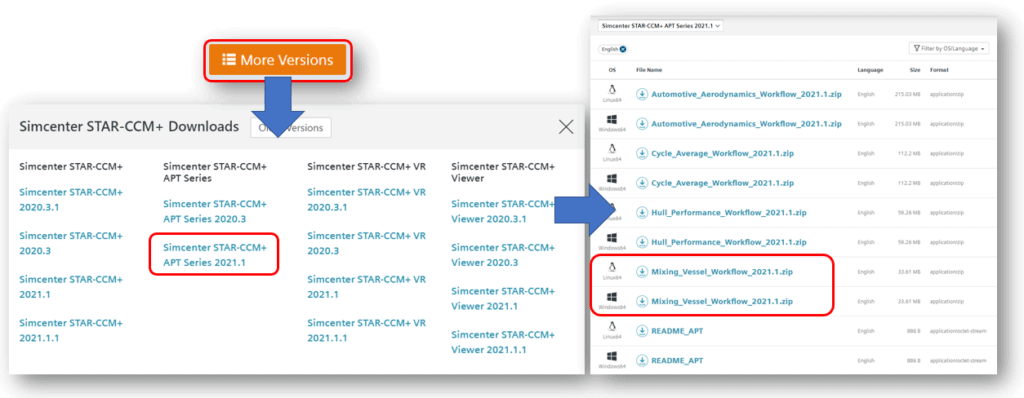
If you navigate to downloads in Siemens Support Center and look at the available API (Application Programming Interface), you find the “Mixing Vessel Workflow” as one of them. The picture below shows where the application can be found. The application was formerly known as Admixtus. This can be downloaded at your leisure and used for calculations and design of mixing vessels. It gives you a smooth workflow located “on top” of Simcenter STAR-CCM+ specifically for mixing vessels. This blog post will show you how to use the application and what it contains. Note that the application requires a license, however the price for the license is included in the basic license. (STAR4001)
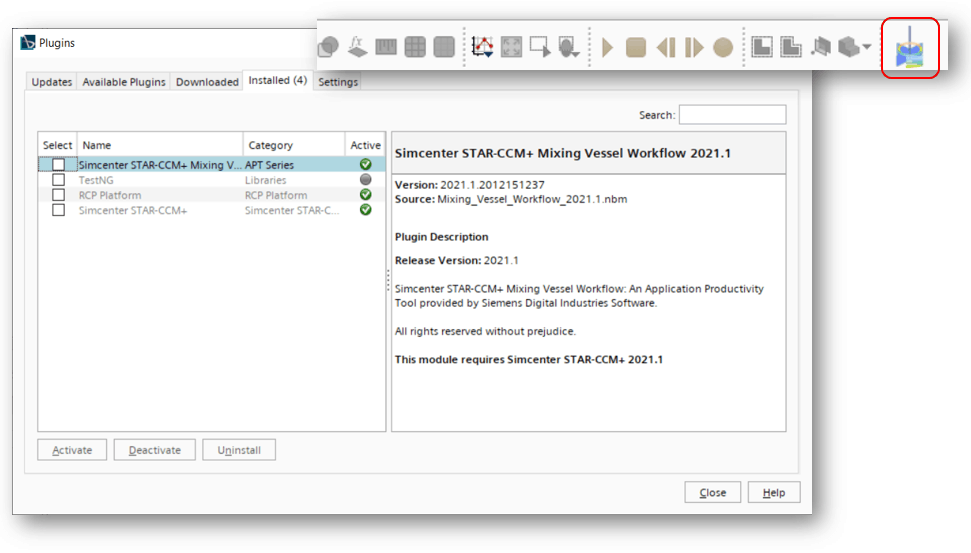
Once the API is installed you can activate it under plugins in Simcenter STAR-CCM+. And once activated you will see the icon for the Application in the toolbar.
Building your mixing vessel
The Mixing Vessel Workflow API consists of several steps that need to be performed in the correct order. The first step in the API is to build your mixing vessel. The API has several useful built-in models for you to use in the design of your mixing vessel. The video below shows the first steps in using the mixing vessel workflow, i.e. to start it and to design a mixing vessel.
Meshing settings and Physics setup
The next clip, see video below, shows how to setup the meshing and physics selection. It covers basically some help for you how to define your mesh settings and your physics continua.
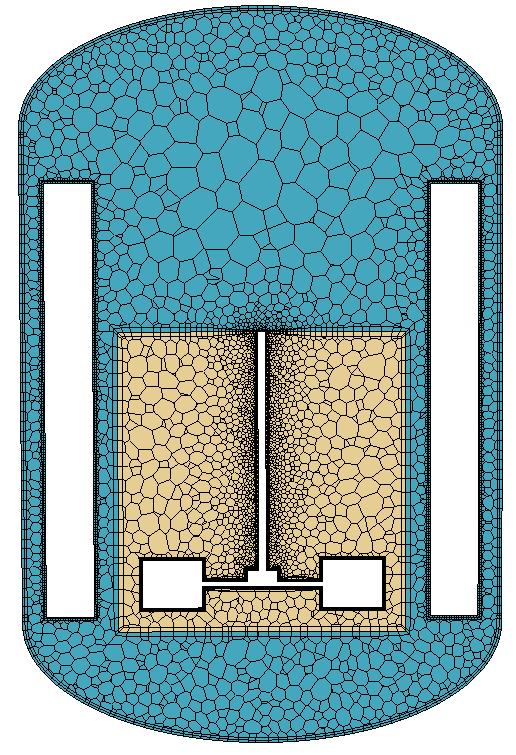
If you select the option “mesh now” in mesh setup stage, the mesh turns out like in the picture below, this using the default settings for the geometry. You can see that a domain is automatically created with a sliding mesh setup. This is to take account for the rotating shaft and impeller and refinements are made around the geometry parts that are rotating and around the baffles. The picture comes from a scene in Simcenter STAR-CCM+, and not from the API.
Report setup, post processing and running
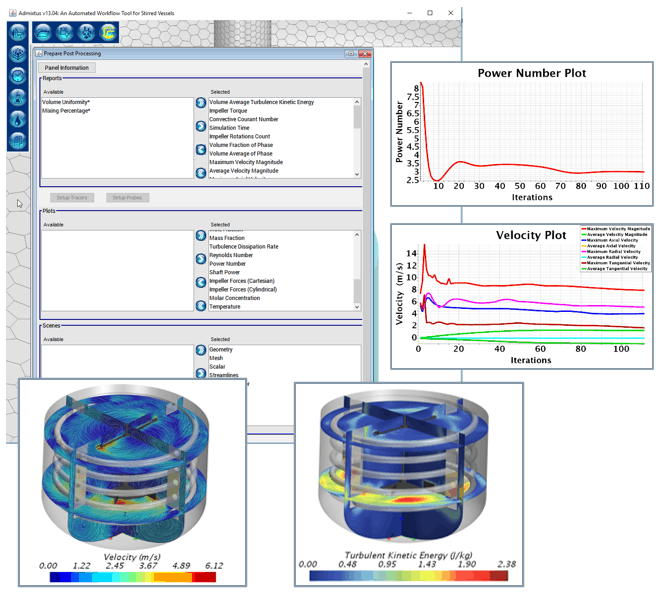
From here on you can continue with the setup for post processing. The mixing vessel workflow automatically generates a range of typical reports, plots, and scenes for you to use in the evaluation of your mixing vessel. You can run the simulation directly from the API, or you can leave it and continue in the regular Simcenter STAR-CCM+ GUI.
I hope that this has been useful and a way to give you some insight to the tools available for you as a STAR-CCM+ user. If you have any questions, as usual, reach out to us at support@volupe.com.