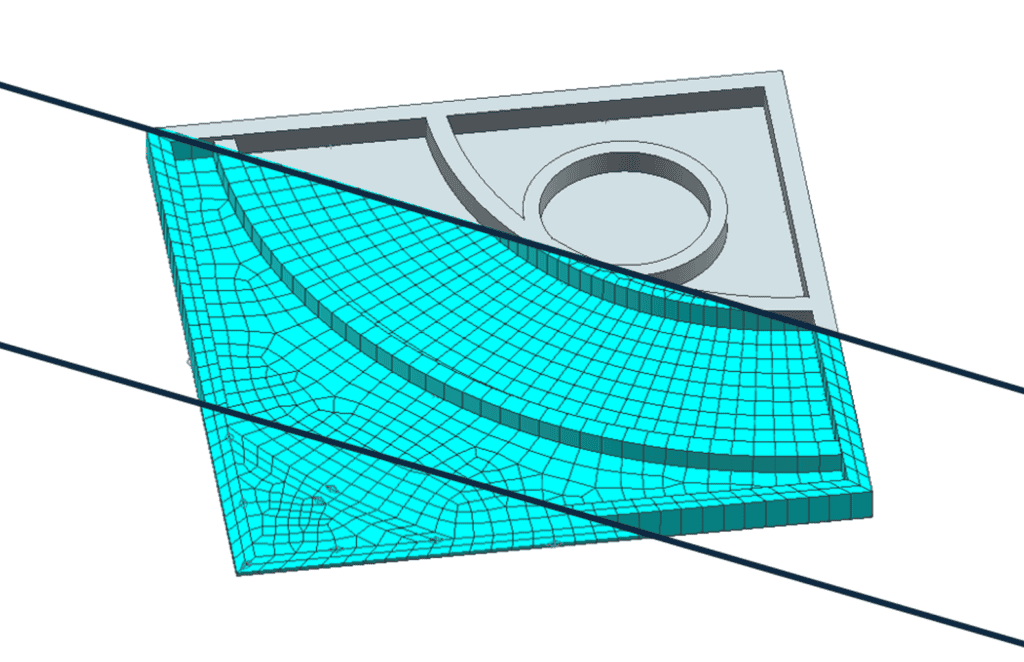
Midsurface Geometry Swiftly in Femap and Simcenter 3D
Midsurface commands in Simcenter 3D and Simcenter Femap that turn thin-walled solid assemblies into shell models.
Midsurface commands in Simcenter 3D and Simcenter Femap that turn thin-walled solid assemblies into shell models.
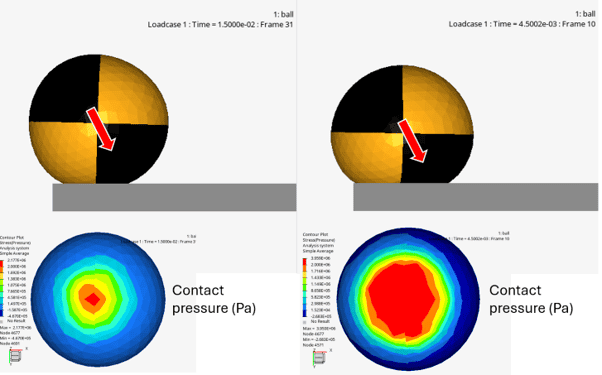
A look at the bouncing ball paradox: the model is prepared in Simcenter HyperMesh and the impacts are solved with Simcenter Radioss.
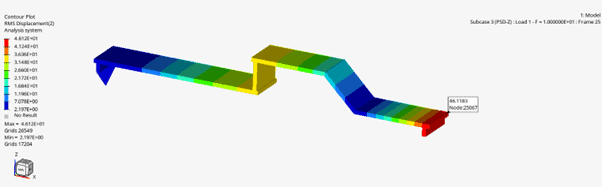
A closer look at the input to a random response analysis and the most common results, using Simcenter HyperMesh, OptiStruct, HyperView and HyperGraph.
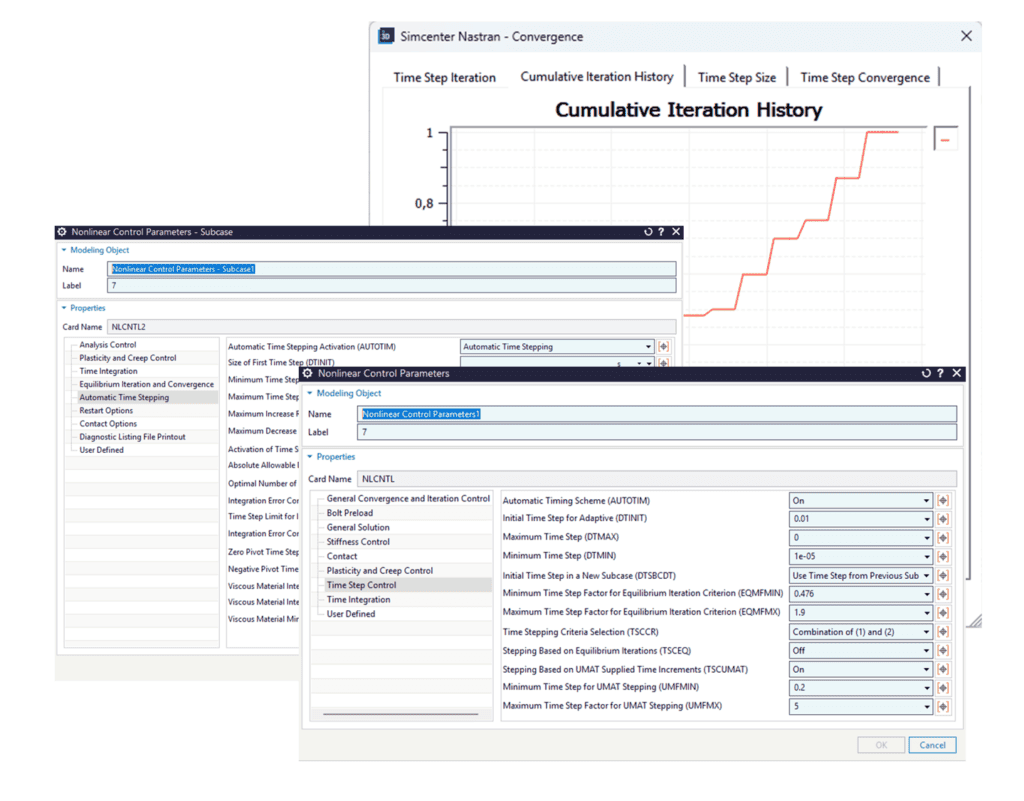
How Simcenter Nastran writes output and controls adaptive time stepping in nonlinear SOL 401 and SOL 402.
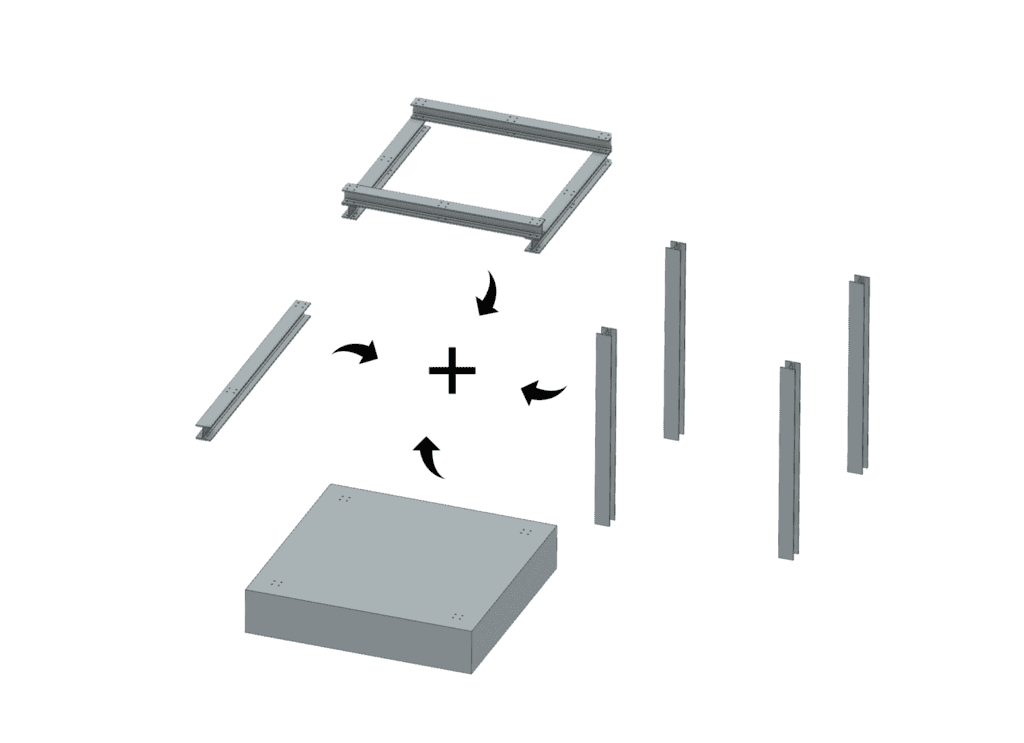
Split a large model into component FEMs in Simcenter 3D, swap solid and shell versions, and solve only part of it.
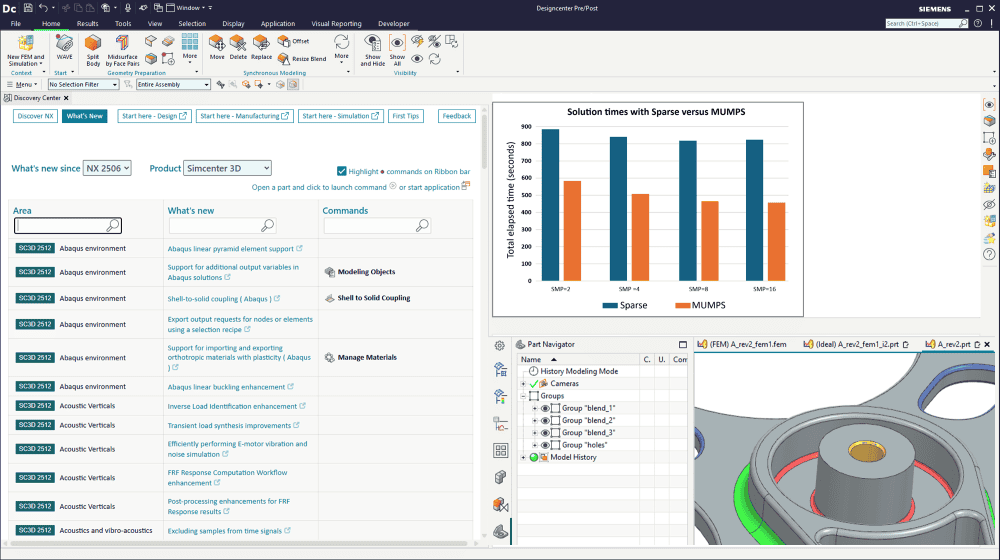
We are back with another blog for Simcenter 3D and Simcenter Nastran. Soon January has already blown past us, but just before many of us were sending our last email before the holidays, version 2512 of Simcenter 3D and Nastran were released. In this post we will summarise some of the major updates and give you clues of how they can impact your workflows.

Since we have started having frost nights here in Sweden it came to me recently when I started looking over
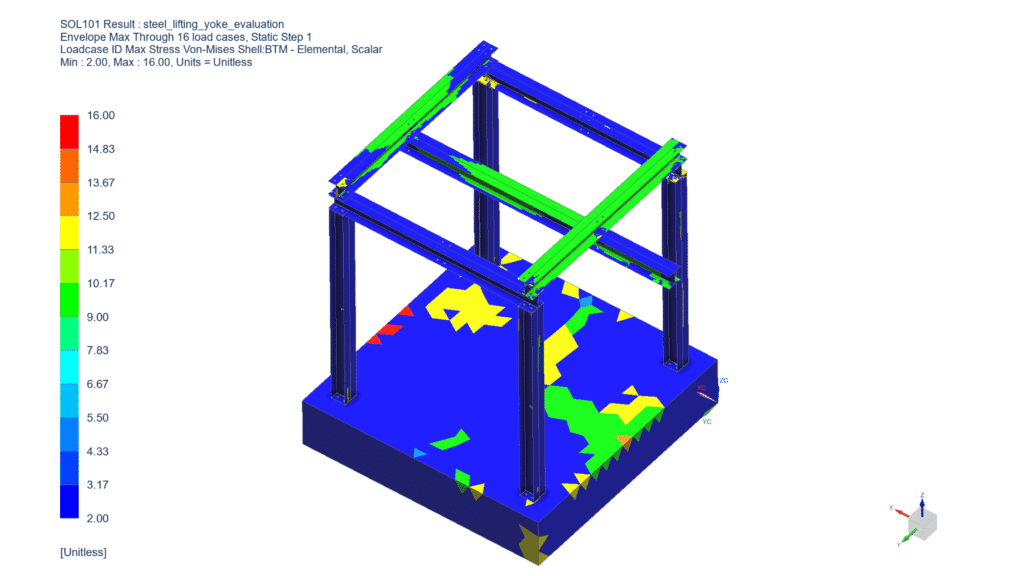
A steel structure with many load cases in Simcenter 3D, and result envelopes that show the worst case.
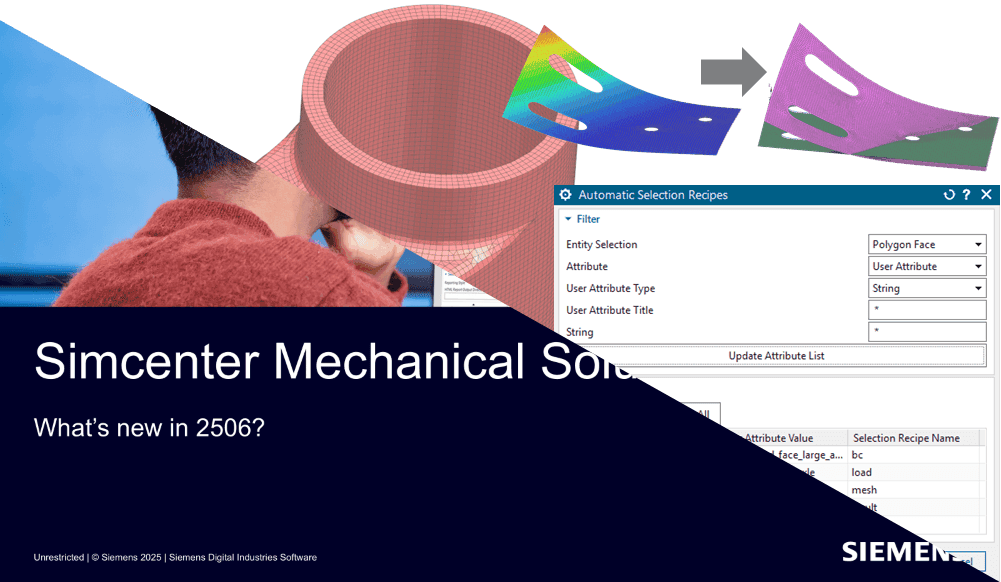
Coming back from vacation, some of you may have missed that just at the beginning of this summer Simcenter 3D