Explicit crash and impact simulation
Simcenter Radioss
formerly Altair Radioss
Simulate crashes, drop tests, blasts and bird strikes, and see how your structure deforms, fails and absorbs energy before you build a prototype.
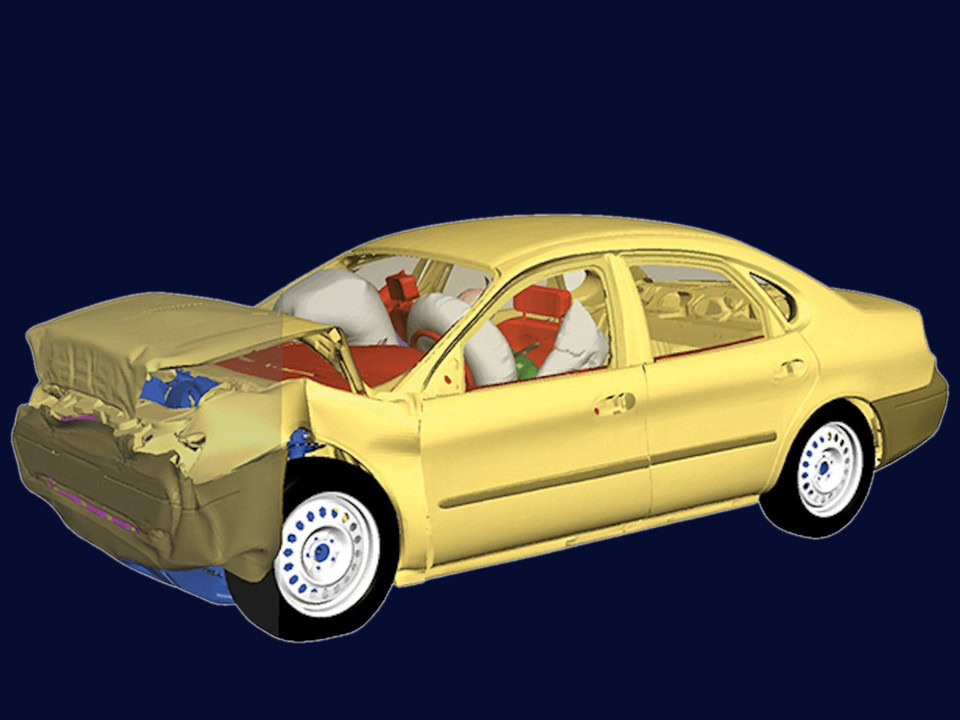
LS-DYNA
Runs LS-DYNA decks, says Siemens
Directly within the GUI, plus file conversion tools for Abaqus users.
2026.1
New material laws
The first Simcenter release of Radioss adds material laws for composites, anisotropy and creep.
Smart Expert
Support from engineers
Siemens-certified expertise, and a Top European Partner award for customer support.
What is Simcenter Radioss?
Simcenter Radioss, formerly Altair Radioss, is an explicit finite element solver from Siemens Digital Industries Software for highly nonlinear, short events such as crashes, impacts, drop tests, blasts and ballistics. It predicts how structures deform, fail and absorb energy, so you can design for safety before the first physical test.
Run LS-DYNA input decks directly, Siemens says, and bring Abaqus models in through file conversion tools
Model composites and other materials to failure with dedicated material and damage models
Scale large models across computing architectures, and reuse the results to train AI models
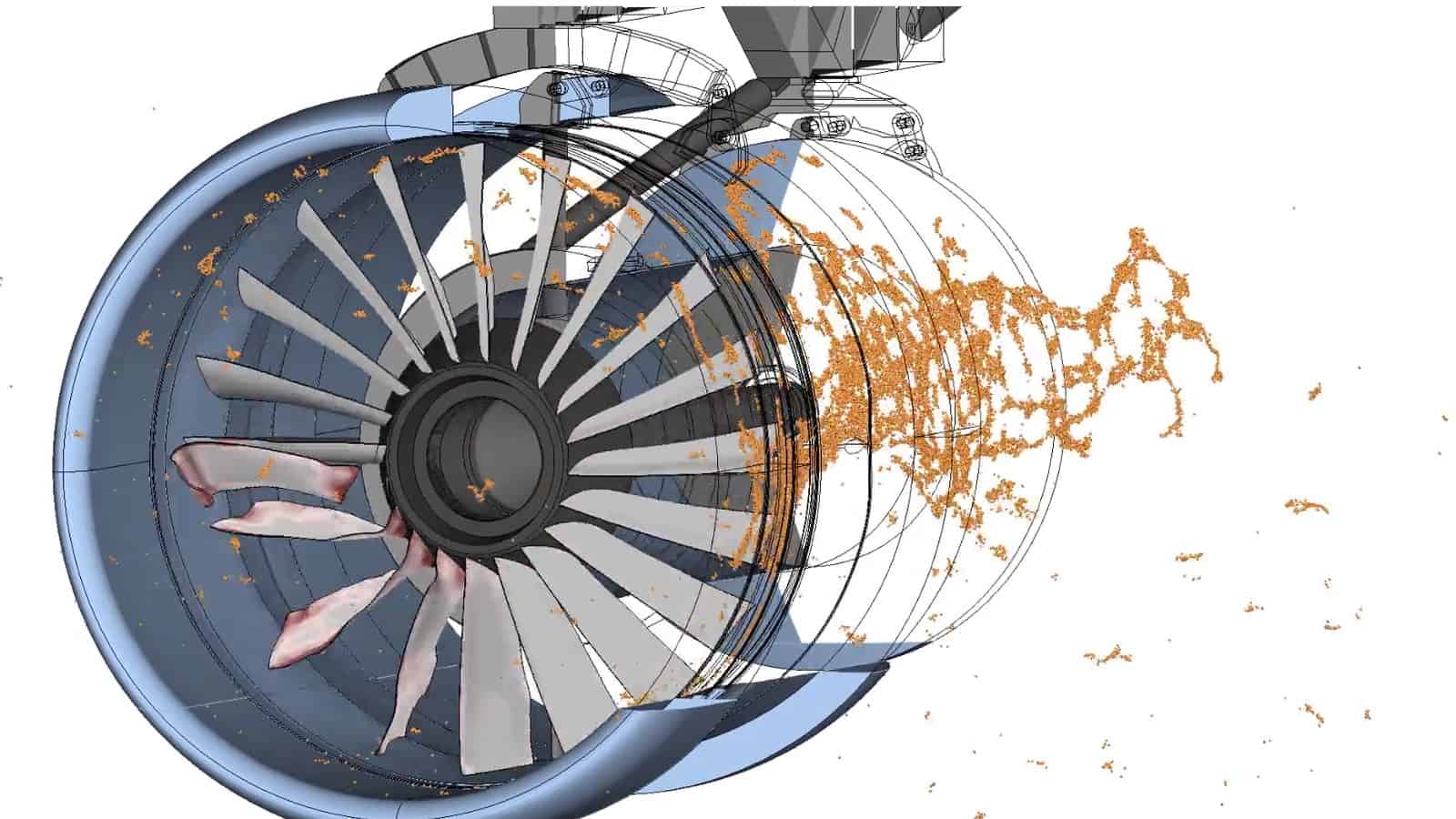
Siemens example: a bird strike on a jet engine fan in Simcenter Radioss, with damaged blades and scattered bird debris.
See a Radioss study by Johan DahlbergDeveloper
Siemens Digital Industries Software (Siemens acquired Altair in 2025)
Current release
Simcenter Radioss 2026.1 (June 2026)
Input decks
Radioss and LS-DYNA; Abaqus through file conversion
Altair and OpenRadioss users
Coming from Altair Radioss or OpenRadioss?
Siemens has renamed Altair Radioss and moved it into Simcenter, together with other former Altair tools. If you run Altair Radioss, the rebrand is, in Siemens’ words, “additive, not disruptive”: it keeps the tools and workflows you rely on. OpenRadioss is a different case: Siemens has retired its website.
Renewing a Radioss licence? Get a quote Ran OpenRadioss? Ask about your modelsName
Altair Radioss → Simcenter Radioss
OpenRadioss
Open source from 2022 → Siemens has retired the OpenRadioss website and points to Simcenter Radioss for production work and the Radioss R&D Program for research
Licence
Altair Radioss licence or Altair Units pool, from Altair or a partner → send Henrik Pahlitzsch your set-up (seats, or your Units pool and the tools that draw on it) and your renewal date for a Simcenter Radioss quote
Releases
Altair Radioss releases → Simcenter Radioss 2026.1 (June 2026), then a Simcenter release every June and December
Support
Altair support → Siemens Support Center, plus Volupe’s engineers when you license Radioss through us
Where explicit simulation is used
Crash, impact and blast simulation, before the prototype
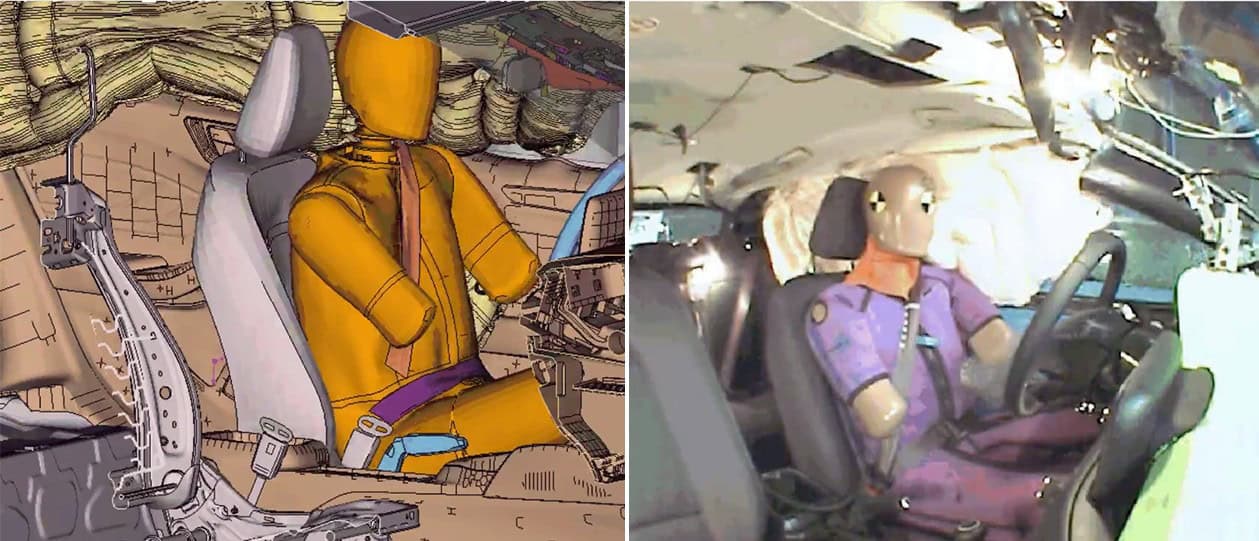
Crash simulation and occupant safety
Simulate full-vehicle crashes, high-speed impacts and rollovers, with material and failure models for electric-vehicle batteries and urban air mobility. Partner tools add crash dummies and human body models, and Siemens pairs Radioss with Simcenter Madymo, coupling their results to assess injury metrics such as the head injury criterion (HIC) and chest deflection in one workflow.
Image: Siemens. Simulation on the left, physical crash test on the right.
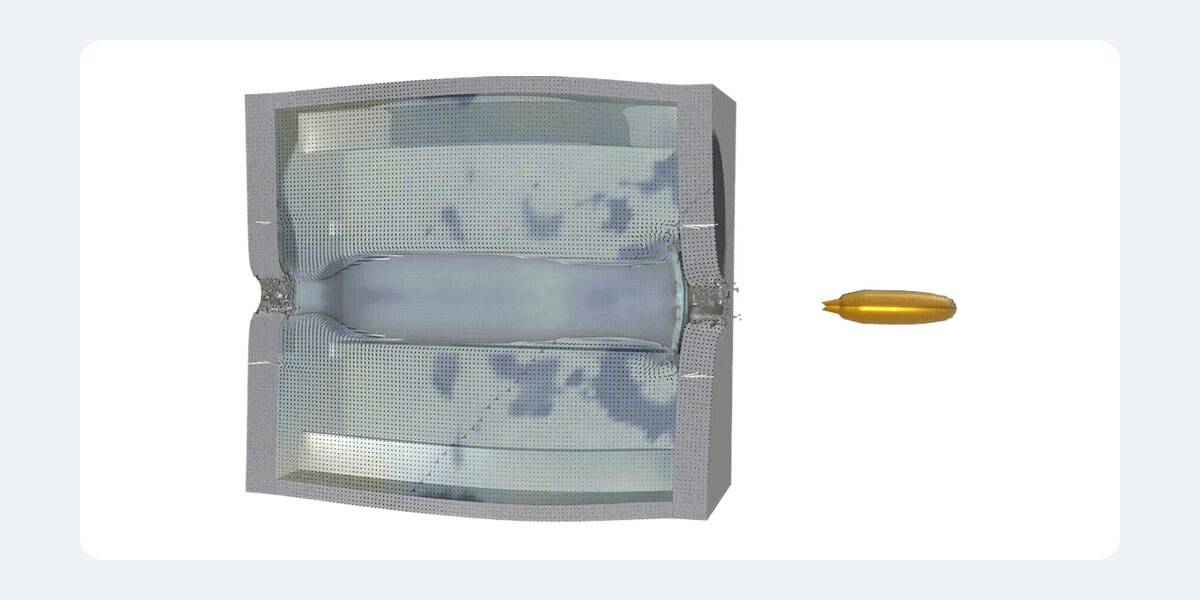
Blast and ballistics
Arbitrary Lagrangian-Eulerian (ALE) and smoothed-particle hydrodynamics (SPH) methods simulate blast and ballistic impacts on protective systems, equipment and critical infrastructure.
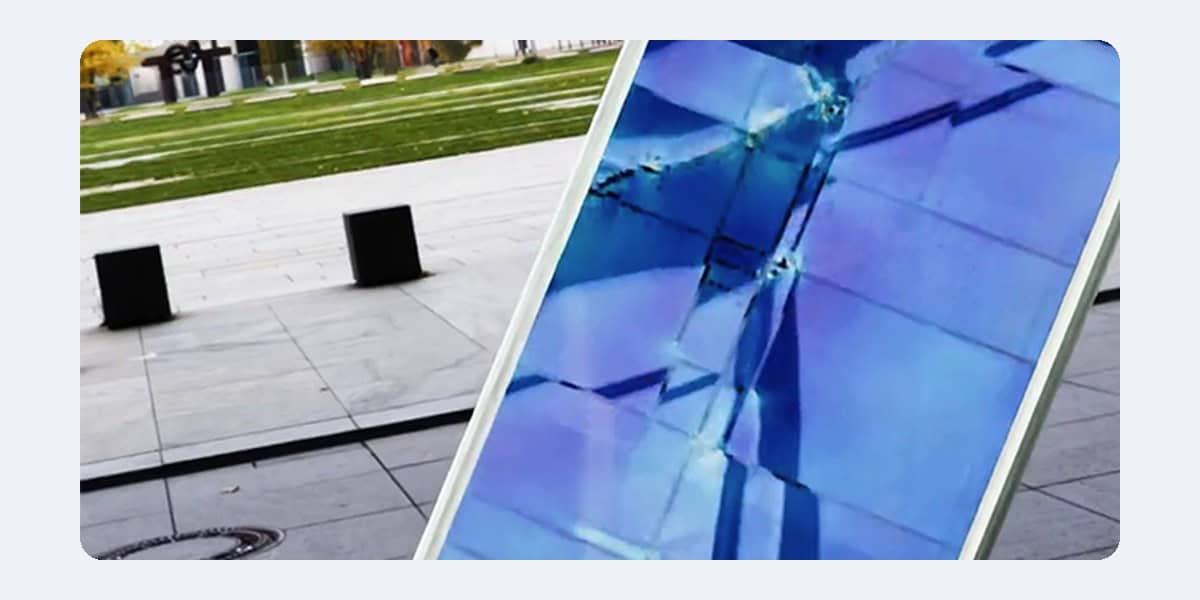
Drop tests and misuse
See how screens, batteries, casings and their packaging behave under shock in drop tests, impacts and misuse.
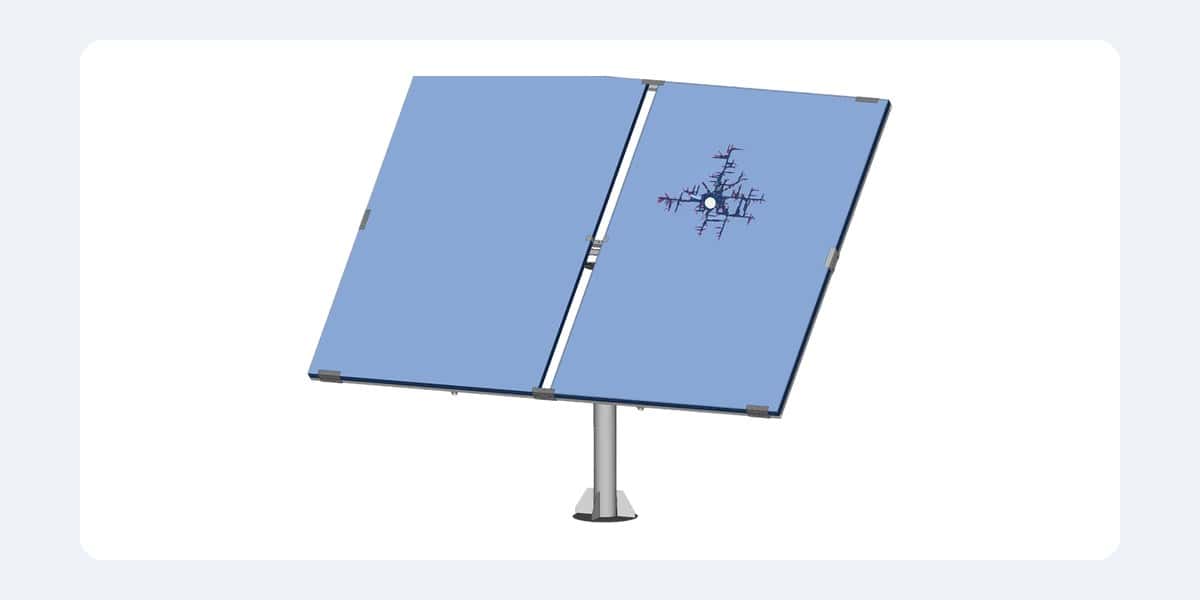
Hail, seismic and sudden loads
Simulate hailstone impact on components such as solar panels, and seismic and other sudden loads on energy infrastructure, to help make both more resilient.
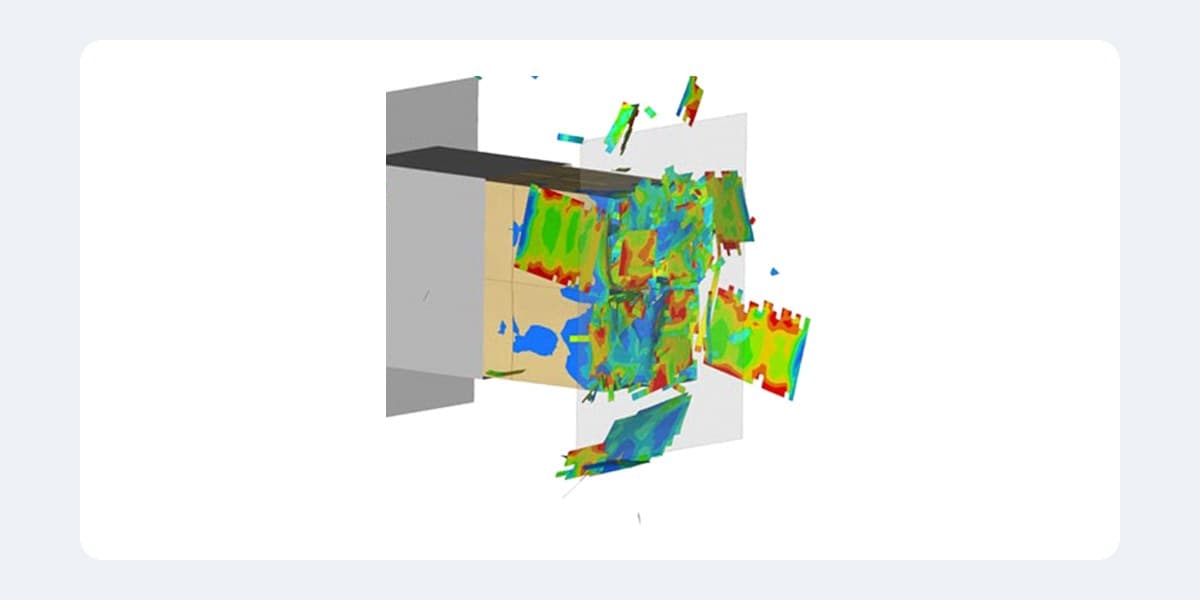
Composites that crack and break
Model how composite parts crack and break with the composite material and damage models in Radioss. Version 2026.1 makes solid and thick-shell properties more stable in extreme deformation.
Related tools
Often used with Simcenter Radioss
Worked example
The bouncing-ball paradox in Simcenter Radioss
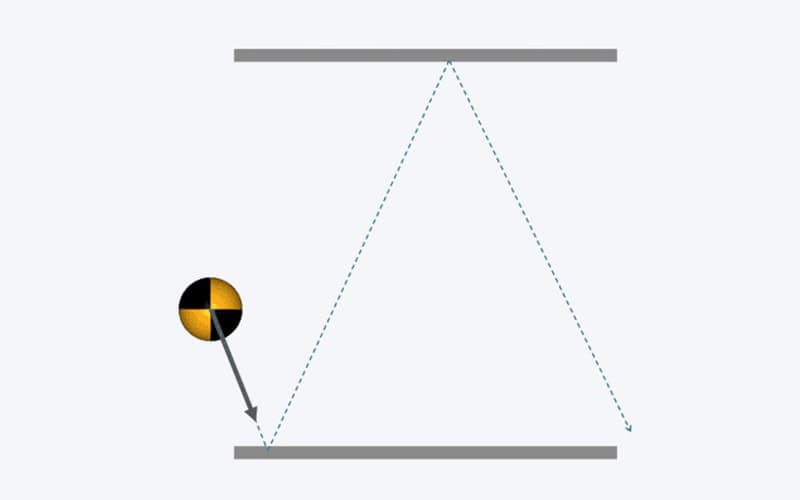
Spin from a bouncing ball
Johan Dahlberg, our application support specialist for the former Altair tools, rebuilt a well-known physics puzzle. Intuition says a ball bounced under a table zig-zags out on the far side, as the dashed line shows; in fact it comes back out on the side it was thrown from. He meshed the elastic ball in Simcenter HyperMesh, solved the impacts in Simcenter Radioss at 10.8 and 21.6 m/s, and compared how contact friction changes the spin and how impact speed changes the contact pressure.
Read Johan’s bouncing-ball study
Download the model files
Questions about Simcenter Radioss
Your Radioss contacts
Technical questions
Johan Dahlberg
Application Support Specialist, Ph.D.
Specialist in the former Altair tools · LinkedIn
How is Simcenter Radioss priced?
Each set-up is quoted individually: the price depends on the number of users, the licence term and any add-on modules. If you run Altair Radioss today, tell us how you license it (for example seats, or Altair Units, Altair’s units-based subscription model) and when it is due for renewal, then request a Radioss licence quote. Henrik Pahlitzsch handles Radioss licences and renewals.
What changed for Altair Radioss users?
Siemens completed the acquisition of Altair on 26 March 2025. With the June 2026 release, former Altair products joined Simcenter, and Altair Radioss became Simcenter Radioss; the current release is Simcenter Radioss 2026.1. Altair’s support services have moved to the Siemens Support Center, and from December 2026 Simcenter products get two major releases a year. Volupe sells, licenses and supports Simcenter Radioss in all its markets.
What happened to OpenRadioss?
Altair released Radioss as open-source software, OpenRadioss, in 2022. In October 2026 Siemens retired the OpenRadioss website, which now redirects to a Siemens transition page. That page points to Simcenter Radioss, which Siemens describes as designed for production engineering workflows, and to the Radioss R&D Program. The R&D Program is a managed shared-source environment in which academic and industrial partners work with Siemens’ development teams on approved projects, with access to the source code. OpenRadioss used the same input and output formats as Radioss, so if you ran models in OpenRadioss, ask our engineers about moving them to Simcenter Radioss.
When should I use Simcenter Radioss rather than an implicit solver?
According to Siemens, Radioss is best for highly nonlinear, transient events that last a short time, such as crashes and impacts, and implicit solvers are better for static or long, low-speed events. For implicit work, look at Simcenter OptiStruct, which Siemens describes as spanning implicit to explicit analysis. Radioss can also handle a static case through quasi-static loading, with options such as /DYREL (dynamic relaxation) or /KEREL (kinetic relaxation).
Can Simcenter Radioss run LS-DYNA models?
Siemens says LS-DYNA input decks run directly within the GUI, and file conversion tools support Abaqus users. The new material laws in Radioss 2026.1, for composites, anisotropy and creep, also come with LS-DYNA mapping. Ask our engineers to check your own deck.
What is new in Simcenter Radioss 2026.1?
Siemens lists five highlights. Enhanced solid and thick-shell properties are more stable in extreme deformation. New material laws model composites, anisotropy and creep, with LS-DYNA mapping. Guided cable contact handles cable-in-sleeve behaviour in dummy and human body models. GPU coupling for blast fluid-structure interaction (FSI) shortens turnaround, and updated CPU utilisation improves shared-memory (SMP) performance on modern architectures.
Do you offer Simcenter Radioss support and training?
Yes, we support Simcenter Radioss: Johan Dahlberg answers technical questions, and once you have a licence you can also use the Siemens Support Center. For training, Radioss is not among the scheduled courses on our training page, so tell us what your team needs. For a worked example, read Johan’s bouncing-ball study.